One: As a sound insulation countermeasure for windows, the structure of double-layer windows is usually adopted. You can keep the existing window and add another window; or remove the existing window and install a new glass with the same thickness and the same resonant frequency. This makes sounds around that frequency stand out. Under normal circumstances, the interval between two layers of windows should be 20cm-30cm. To achieve the same -50dB sound insulation effect as the concrete wall, it is best to have a gap of more than 30cm between the two layers of glass. It would be better if some sound absorption measures could be taken during this interval. Correct construction, the room can guarantee the sound insulation characteristics of -50dB.
Two: The second weak link is the door. The worst sound insulation effect is the door installed in the general collective apartment and simple home decoration. There is a large gap between the door and the door frame with rough plywood nails, and its sound insulation performance is at most -15dB. The sound insulation characteristics of general residential doors can reach -25dB~-35dB. The higher performance, the kind of iron doors used in listening rooms are rarely seen in residential buildings. Now more and more double anti-theft doors have good sound insulation characteristics.
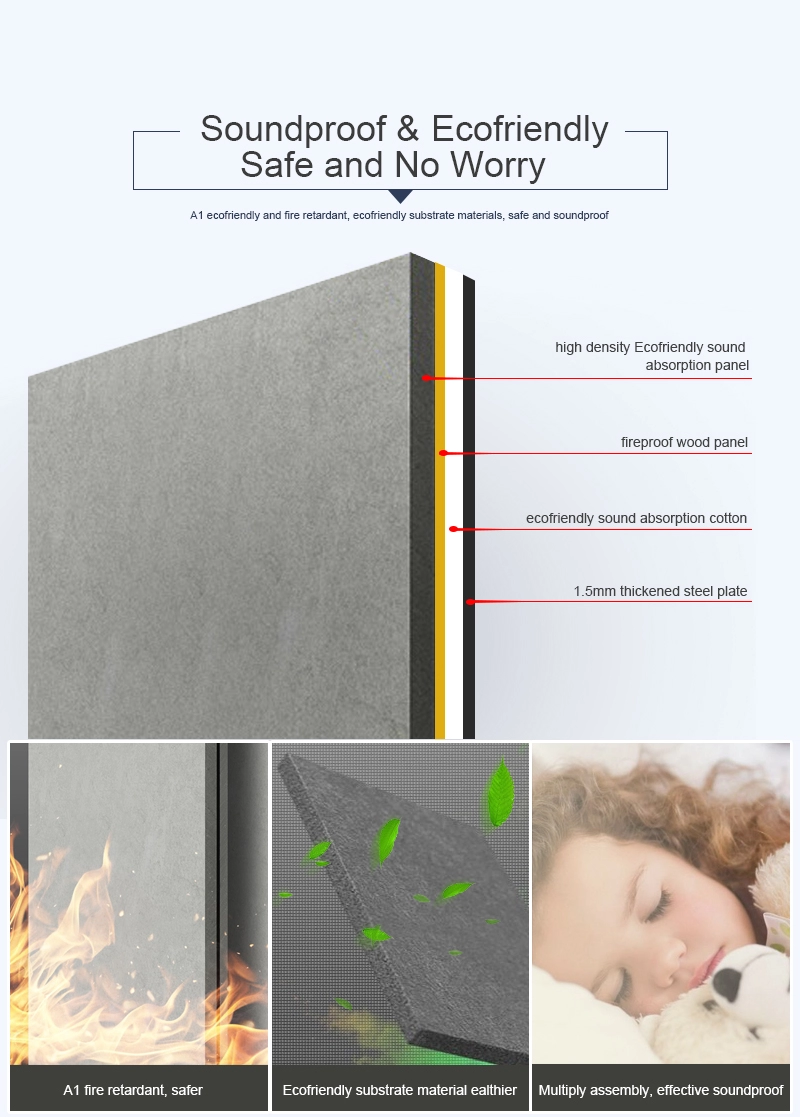
Three: The next work is to enhance the sound insulation properties of various walls. Generally, the load-bearing walls of residential buildings are made of steel plate concrete or solid bricks, which have better sound insulation effect. The problem mostly lies in the light hollow bricks or gray glue cardboard used in the partition wall, and the sound insulation performance is only -25dB~-30dB. Most home theater rooms have one or two walls in this structure. Without a doubt, this is where the most serious sound leakage occurs, except for windows and doors. If no measures are taken, the air vibration in the middle of the hollow brick will cause the wall to resonate, which is very detrimental to the sound quality. There are two specific solutions. One is to demolish the original wall and rebuild a soundproof wall; the other is to retain the original wall and add a soundproof wall.
Four: To achieve real sound insulation, it is natural to implement sound insulation measures on the six sides of the room. If only a certain amount of sound insulation is added to the walls (partitions) of adjacent rooms, the impact of the floor and ceiling on the sound will be prominent. To prevent this from happening, complete undercut soundproofing must be done on all six sides of the room. To better improve the sound insulation characteristics of the room, it is to recreate a room in the room, that is, the structure of the so-called "room within a room".